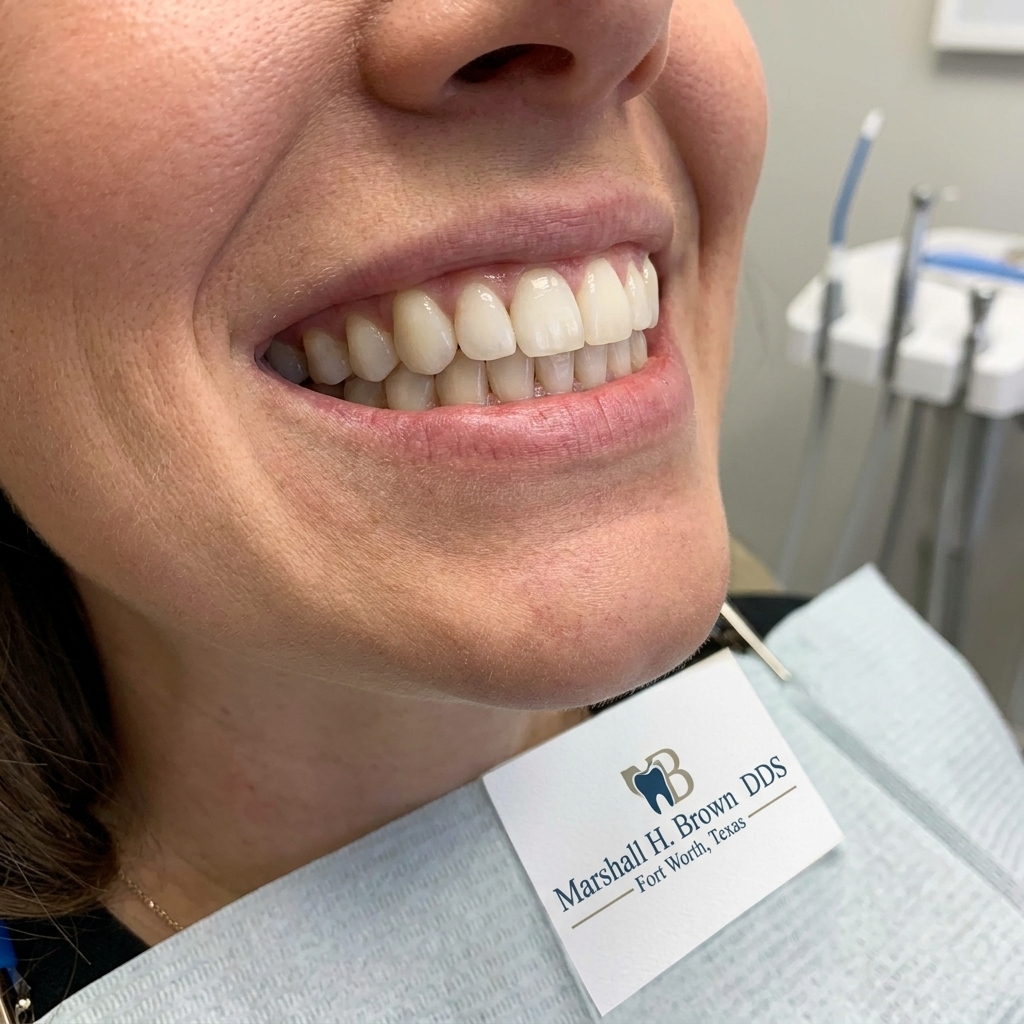


"I had seven old silver amalgam fillings that had been making me self-conscious for years. Dr. Brown replaced them all with tooth-colored restorations and the transformation is incredible. You literally cannot tell any of them are fillings. My smile looks completely natural for the first time in decades. The process was comfortable and the results are stunning."
Fort Worth, TX — Mercury-Free Dental Practice
Tooth-Colored Fillings
That Look & Feel Natural
We are a mercury-free practice. Dr. Marshall H. Brown uses tooth-colored composite resin and porcelain restorations that don't just fill the cavity — they restore strength to the tooth, look completely natural, and contain no mercury. Old silver amalgam fillings can be safely replaced with beautiful, stronger alternatives.
- 100% Mercury-Free
- Composite Resin Fillings
- Porcelain Inlays & Onlays
- Replace Old Silver Fillings
- Mercury Content
- 0%
- Direct Filling — Completed In
- 1 Visit
- Google Rating
- 4.7★
- Most Insurance Accepted
- Yes
Why It Matters
Silver Amalgam vs.
Tooth-Colored Restorations
Many people still have old silver amalgam fillings from years past. Understanding the difference between the two materials helps explain why tooth-colored restorations are the superior long-term choice.
Silver Amalgam Fillings
The Old Standard
- Contain 50% mercury — can corrode, leak, and cause staining on teeth and gums
- Edges can wear down, become weak, or break — leaving the tooth unprotected and vulnerable to new cavities
- Metal expands and contracts with temperature changes over time — this can cause the tooth to split
- Does not bond to the tooth structure — does not add strength
- Dark, metallic appearance — highly visible in the mouth when smiling or speaking
- Requires more healthy tooth structure to be removed for placement
Tooth-Colored Restorations
The Modern Standard
- 100% mercury-free — completely safe composite resin or porcelain material
- Bonds directly to the tooth structure — creating a tight, superior fit that adds strength to the tooth
- Resin contains fluoride — helps prevent future decay from starting around the restoration
- Wears like natural teeth — does not expand or contract with temperature changes
- Does not require placement at the gum line — healthier for the surrounding gum tissue
- Completely invisible — matched precisely to your natural tooth colour
Which Restoration Is Right for You?
Three Types of Tooth-Colored
Restoration Available
The appropriate restoration depends on how much tooth structure remains and the location of the cavity or damage. Dr. Brown will recommend the most conservative option that adequately addresses your situation.

Direct Composite Filling
The most common tooth-colored restoration for small to medium-sized cavities. Composite resin is applied directly to the cleaned and prepared tooth in thin layers, each cured with a UV light, then shaped and polished to match your natural tooth. Completed in a single comfortable visit.
Single Appointment
Porcelain Inlay
A porcelain inlay is a laboratory-fabricated restoration that fits precisely within the cusps of a back tooth. Used when a cavity is too large for a direct composite filling but the cusps of the tooth remain intact. Stronger and more durable than a direct filling for larger restorations.
Lab-Fabricated — 2 Appointments
Porcelain Onlay (Tooth-Colored Restoration)
A porcelain onlay extends over one or more cusps of the tooth and is used when much of the tooth structure has been lost. Stronger than an inlay and more conservative than a full crown, an onlay keeps the tooth intact while adding significant strength. Thanks to new bonding technologies, these restorations are both beautiful and extremely durable.
Replaces Old Silver Fillings
Not sure which is right for you?
During your examination, Dr. Brown will assess the extent of decay
or existing filling failure and recommend the most conservative
restoration option that provides the best long-term outcome.
Book a consultation or call
(817) 920-0882.
Why Tooth-Colored Is Better
The Many Advantages of
Tooth-Colored Restorations
Porcelain inlays and tooth-colored restorations (onlays) create fillings that are not only beautiful — or completely unnoticeable — but also add strength to weakened teeth. These restorations are aesthetically pleasing and very strong, thanks to advanced bonding technologies.
The result is a beautiful smile — and teeth that are genuinely stronger and more protected than they were with their old silver fillings in place.
Superior Bond Strength
Resin onlays bond directly to the tooth, creating a tight, superior fit. This creates a seal that prevents bacteria from re-entering and adds structural strength.
Completely Invisible
Matched precisely to the colour of your surrounding teeth, tooth-colored restorations are virtually undetectable — even to other dentists.
Fluoride Release
Composite resin contains fluoride, which is slowly released to help prevent decay from starting around the edges of the restoration.
Tooth Remains Intact
Composite restorations require less removal of healthy tooth structure than amalgam — the remaining tooth structure stays stronger and more complete.
Healthier for Gums
Tooth-colored restorations do not require placement at the gum line, which is significantly healthier for the surrounding gum tissue.
Wears Like Natural Teeth
The resin material wears at a rate similar to natural enamel — unlike metal which expands, contracts, and can eventually crack the tooth.
The Result Is a Beautiful Smile
Your teeth are restored to a natural look and feel. They are stronger than before, the tooth is protected, and the restoration is completely undetectable.
Replacing Old Silver Fillings
How Dr. Brown Replaces a
Silver Filling in Two Visits
Silver fillings can be safely replaced with tooth-colored restorations. For porcelain inlays and onlays, the process requires two comfortable appointments at our Fort Worth office.
Your First Appointment
Preparation & Impression
- The old silver filling is removed along with any additional decay
- The tooth is thoroughly cleaned and prepared for the new restoration
- An impression of your teeth is taken with precision accuracy
- A model of your teeth is made and sent to our dental laboratory
- A temporary onlay is placed on the tooth to protect it while you wait
Meanwhile at the Lab...
A resin is carefully placed into the model of your teeth and artfully shaped to look completely natural — matching the colour, contour, and translucency of your surrounding teeth.
Your Second Appointment
Bonding & Finishing
- The temporary onlay is gently removed
- A conditioning gel is applied to the tooth surface to prepare it for the new restoration
- Bonding cement is applied to the tooth to create a secure, lasting bond
- A high-intensity curing light bonds the resin permanently to the tooth structure
- The restoration is polished to a smooth, natural-looking finish
The Final Result
Your teeth are restored to a completely natural look and feel. They are stronger than before, the tooth is fully protected, and the restoration is completely undetectable.
Simple direct fillings are completed in a single visit.
The two-appointment process above applies to porcelain inlays and
onlays (lab-fabricated restorations). For smaller cavities, a direct
composite resin filling can be placed and finished in one comfortable
appointment — no lab, no temporary filling needed.
Real Patient Results
Fillings & Restorations Before & After
Real Fort Worth patients. See the dramatic difference between old silver amalgam fillings and Dr. Brown's tooth-colored restorations.


Before
After


Before
After


Before
After
Patient Stories
What Our Patients Say About
Their New Restorations
"I had a cracked old filling in a back molar that had been causing temperature sensitivity for months. Dr. Brown explained why a porcelain onlay was the right solution — stronger than a new filling and less invasive than a crown. The two appointments were completely painless and the onlay fits perfectly. The sensitivity is completely gone and I cannot tell it apart from my natural teeth."
"I came in for a routine checkup and Dr. Brown found a small cavity. I was expecting a silver filling but he explained the composite resin option — mercury-free, looks natural, and actually stronger. It was done in one visit and I honestly forgot about it the same day. Zero sensitivity, completely invisible. I'll never go back to old-style silver fillings."
Your Questions, Answered
Fillings & Restorations FAQs
Still have questions? Call us at (817) 920-0882 — we're always happy to help.
Yes — in fact, tooth-colored restorations are often stronger than silver amalgam in the long term. Resin onlays bond directly to the tooth structure, creating a tight fit that adds strength to the tooth. Silver amalgam does not bond to the tooth, and the metal expands and contracts with temperature changes over time — which can eventually cause the tooth to split or crack.
Yes. Silver amalgam fillings can be safely replaced with tooth-colored restorations. Our practice follows established safety protocols for the removal of amalgam fillings. Dr. Brown will assess each filling individually — including its current condition, size, and location — and advise on the most appropriate type of replacement restoration and timing.
Direct composite resin fillings typically last 7 to 10 years with proper care and regular dental checkups. Porcelain inlays and onlays are more durable and can last 10 to 30 years. Longevity depends on the location of the restoration, bite forces, dietary habits, oral hygiene, and attendance at regular checkups where wear can be monitored.
The three types differ in how much of the tooth they restore:
- Direct composite filling — placed and cured directly in the tooth in one visit. Best for small to medium cavities where enough tooth structure remains.
- Porcelain inlay — a laboratory-fabricated restoration that fits within the cusps of the tooth. Used when a filling is too large but the cusps are still intact.
- Porcelain onlay — extends over one or more cusps. Used when much of the tooth structure has been lost. Stronger than a filling, more conservative than a crown.
Dr. Brown will always recommend the most conservative option that adequately restores your tooth's strength and function.
No. All filling procedures — including the removal of old silver amalgam — are performed under local anaesthesia. You will feel nothing during the procedure. Some mild temperature sensitivity in the first day or two after placement is completely normal as the tooth settles, and resolves quickly. Most patients find the experience entirely comfortable.
Most dental insurance plans cover composite (tooth-colored) fillings for front teeth, and many plans now also cover posterior (back) tooth composite restorations at the same rate as amalgam. Coverage for porcelain inlays and onlays varies by plan. Our administrative team will verify your specific benefits before treatment begins and provide a clear, transparent cost estimate with no surprises.
Signs that an old filling may need replacing include:
- Sensitivity or pain in a tooth with a filling
- A visible crack, chip, or darkening around the filling
- A feeling that the filling has shifted or the bite has changed
- New decay detected around the edges of an existing filling
- The filling is very old (15–20+ years for amalgam)
The best way to know for certain is to attend regular dental checkups. Dr. Brown examines all existing restorations at every visit and will advise you honestly if any need attention.
Ready to Replace
Your Old Fillings?
Book your consultation today. Dr. Brown will assess all your existing restorations and recommend the safest, most effective approach to replacing them with beautiful tooth-colored alternatives.
Book a Consultation (817) 920-0882
100% Mercury-Free Practice
4.7★ Rating — 269+ Google Reviews
Most Insurance Accepted
Why Go Mercury-Free?
Related Services
Treatments That Work
Alongside Fillings & Restorations
Dental Crowns
When damage is too great for a filling
Root Canal Treatment
When decay has reached the pulp
Dental Sealants
Prevent cavities before fillings are needed
Porcelain Veneers
Cosmetic option for front teeth
Dental Bonding
Composite resin for cosmetic chips & gaps
All General Treatments
View our full treatment menu